A 3-Pillar Model for Precision Nutrition in Cattle
Modern feedlots face converging pressures to reduce antibiotic use, improve feed efficiency, and support animal welfare. Precision nutrition offers a systems-level answer built on three pillars: tailored bioactives, smart delivery systems, and data-driven timing.
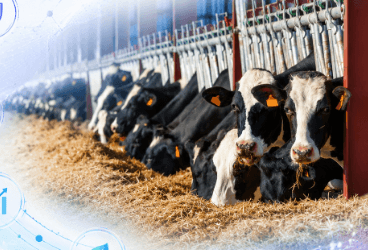
The modern beef feedlot and pasture face converging pressures to reduce antibiotic use, improve feed efficiency, and enhance animal welfare during high‑stress transitions like the receiving period or preconditioning at the farm. Precision nutrition in feedlots must be viewed as a systems‑level integration of three pillars: (i) tailored bioactives with complementary mechanisms of action, (ii) smart delivery systems that protect these compounds from rumen degradation and target their release to the lower gut, and (iii) data‑driven timing that leverages predictive analytics and adaptive feeding to align intervention with the animal's real‑time physiological state.
Tailored Bioactives: Beyond Single Compounds
The core idea is to formulate multiple bioactive substances in animal or human nutrition according to the target physiological state, disease challenges, and environmental pressures. These combinations use complementary or synergistic effects to achieve specific functions rather than relying on a single active ingredient. Its goal is to surpass the effects of traditional single additives while improving production performance, health status, or environmental sustainability. This concept emphasises multi‑component synergy, individualised dosing, and scientific validation, and it is an important direction for developing novel feed additives and nutritional products.
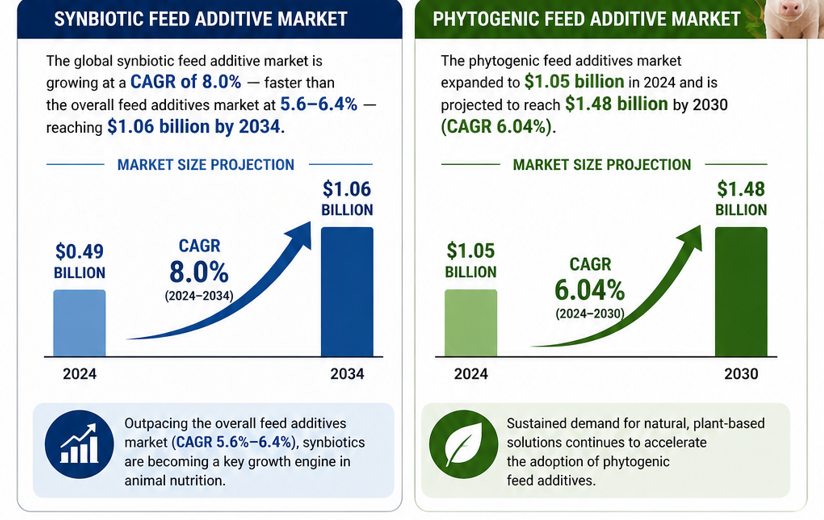
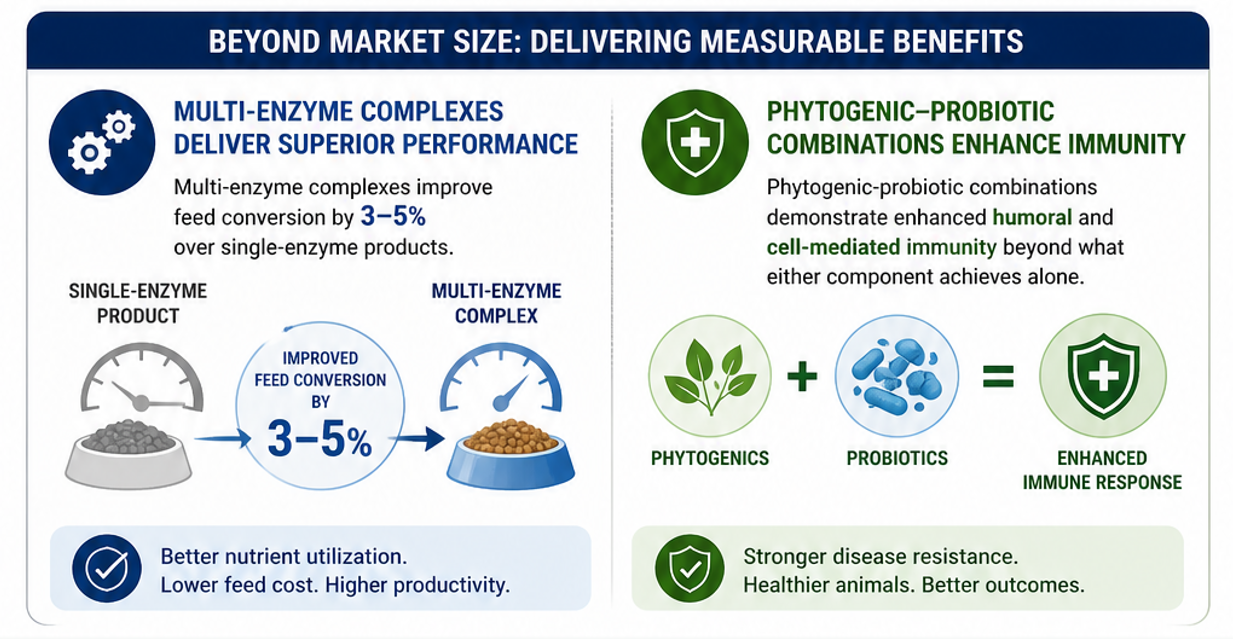
The global synbiotic feed additive market is growing at a CAGR of 8.0% — faster than the overall feed additives market at 5.6–6.4% — reaching $1.06 billion by 2034. The phytogenic feed additives market expanded to $1.05 billion in 2024 and is projected to reach $1.48 billion by 2030 (CAGR 6.04%). Beyond market size, multi-enzyme complexes improve feed conversion by 3–5% over single-enzyme products; phytogenic-probiotic combinations demonstrate enhanced humoral and cell-mediated immunity beyond what either component achieves alone.
Smart Delivery: The Rumen‑Bypass Imperative
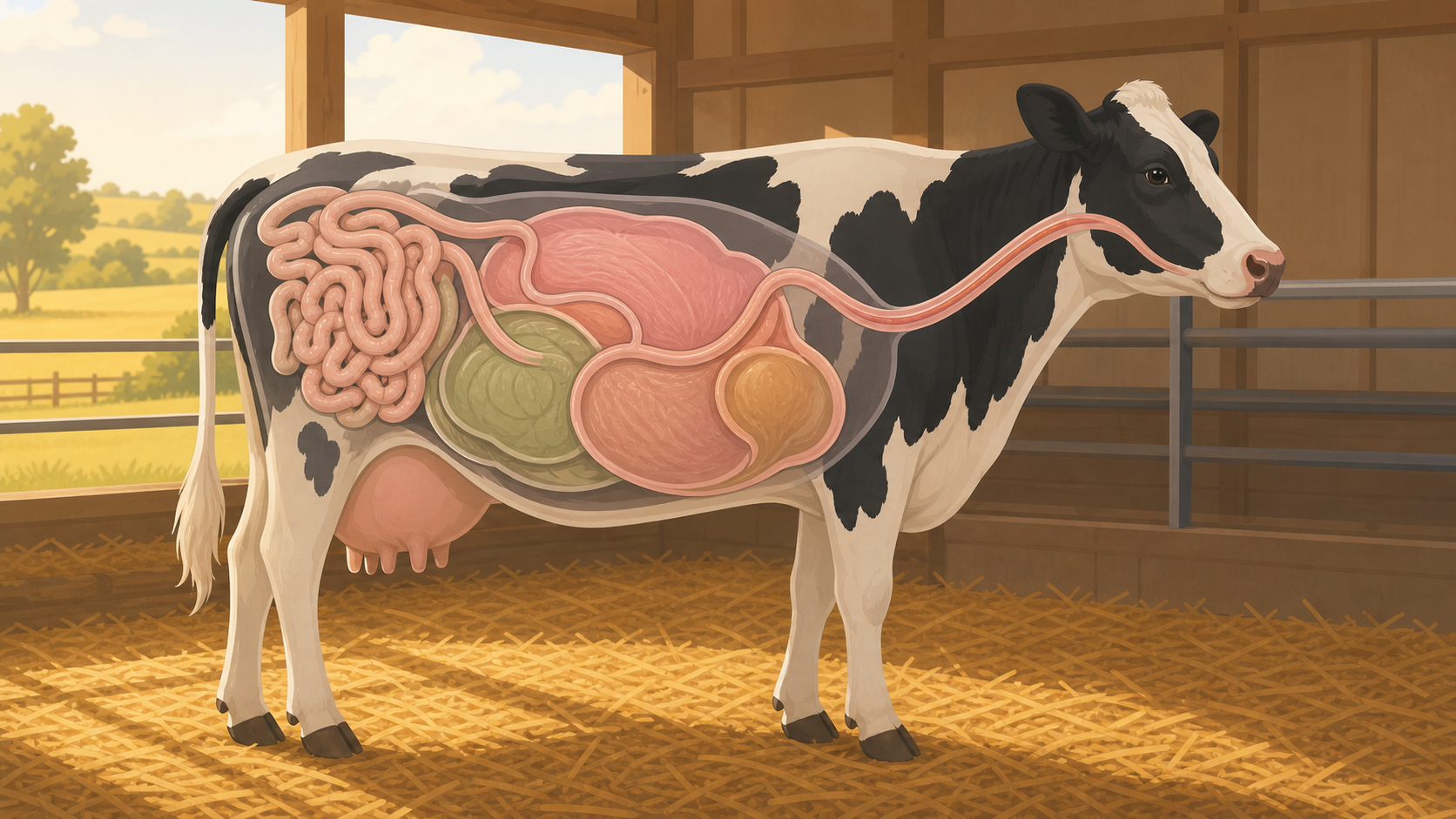
The rumen's microbial consortium is a double‑edged sword: it enables the digestion of fibrous feeds but also rapidly metabolizes many valuable feed additives. Polymeric rumen‑stable delivery systems (RDS) are a "promising alternative" to traditional heat or chemical treatments, which often fail to provide consistent protection. Nutricines — a category that includes oregano essential oil (OEO), polyphenols, enzymes, and oligosaccharides — are particularly vulnerable, as they are either degraded or absorbed before reaching the intestine, where their immune‑modulating effects are most needed.
Data‑Driven Timing: From Static to Adaptive Protocols
Even with the perfect bioactive‑delivery pair, static dosing regimens will under‑ or over‑deliver support depending on the real‑time status of the animal. This is where predictive analytics and adaptive nutrition systems complete the precision triad.
Artificial intelligence is already transforming the feed additive industry — not by replacing nutritionists but by identifying patterns in vast, multi‑source datasets — from feed mill records and IoT sensors to health logs and weather data.
The Complete Picture
When all three pillars are combined, a new picture emerges: precision nutrition is a continuous feedback loop.
- Tailored bioactives (OEO + yeast cell wall components) provide a synergistic, multi‑mechanism base.
- Smart polymeric coatings ensure that these bioactives bypass rumen degradation and are released in the lower gut, where they can train the immune system and support barrier function.
- Predictive analytics and adaptive feeding refine the timing and dosage of this intervention based on real‑time data, turning a static additive into an intelligent, responsive tool.
This system does not rely on a single "silver bullet" ingredient; instead, it acknowledges that animal health is a dynamic state influenced by nutrition, microbiota, immunity, and environment.
Resources
- Aidan Connolly & Camila Ulloa (2026). Artificial intelligence and the next frontier for feed additives. Feed & Additive Magazine.
- Yedi Herdiana (2025). Polymeric rumen‑stable delivery systems for delivering nutricines. Open Veterinary Journal, 15(2), 565–593.